





Anti-Money Laundering Policy at BC Poker in the Philippines
Every platform handling real-money deposits and withdrawals carries a responsibility to keep those funds moving cleanly, and BC Poker takes that responsibility seriously for players across the Philippines just as it does everywhere else it operates. An Anti-Money Laundering policy works quietly behind the scenes of everyday deposits and cash-outs, helping keep the platform a trustworthy place to play rather than a channel for questionable funds. This page explains what that policy actually covers and how it touches a normal player’s day-to-day experience. After BCPoker login, players may be asked to complete identity verification before certain withdrawals or account activities, in line with AML requirements. Complete your identity verification early and enjoy faster, smoother withdrawals whenever it’s time to cash out your winnings.
Why AML Measures Matter for Player Safety in the Philippines
Beyond meeting regulatory expectations, AML measures exist first and foremost to protect the players sitting at the tables. A platform that overlooks suspicious financial activity becomes an easier target for fraud and account manipulation, which ends up hurting honest players far more than it inconveniences anyone with bad intentions. For players across the Philippines depositing through local payment channels or cryptocurrency and expecting a fair, secure environment in return, these checks are a core part of what keeps games trustworthy and cash-outs reliable.
How Transactions Are Monitored
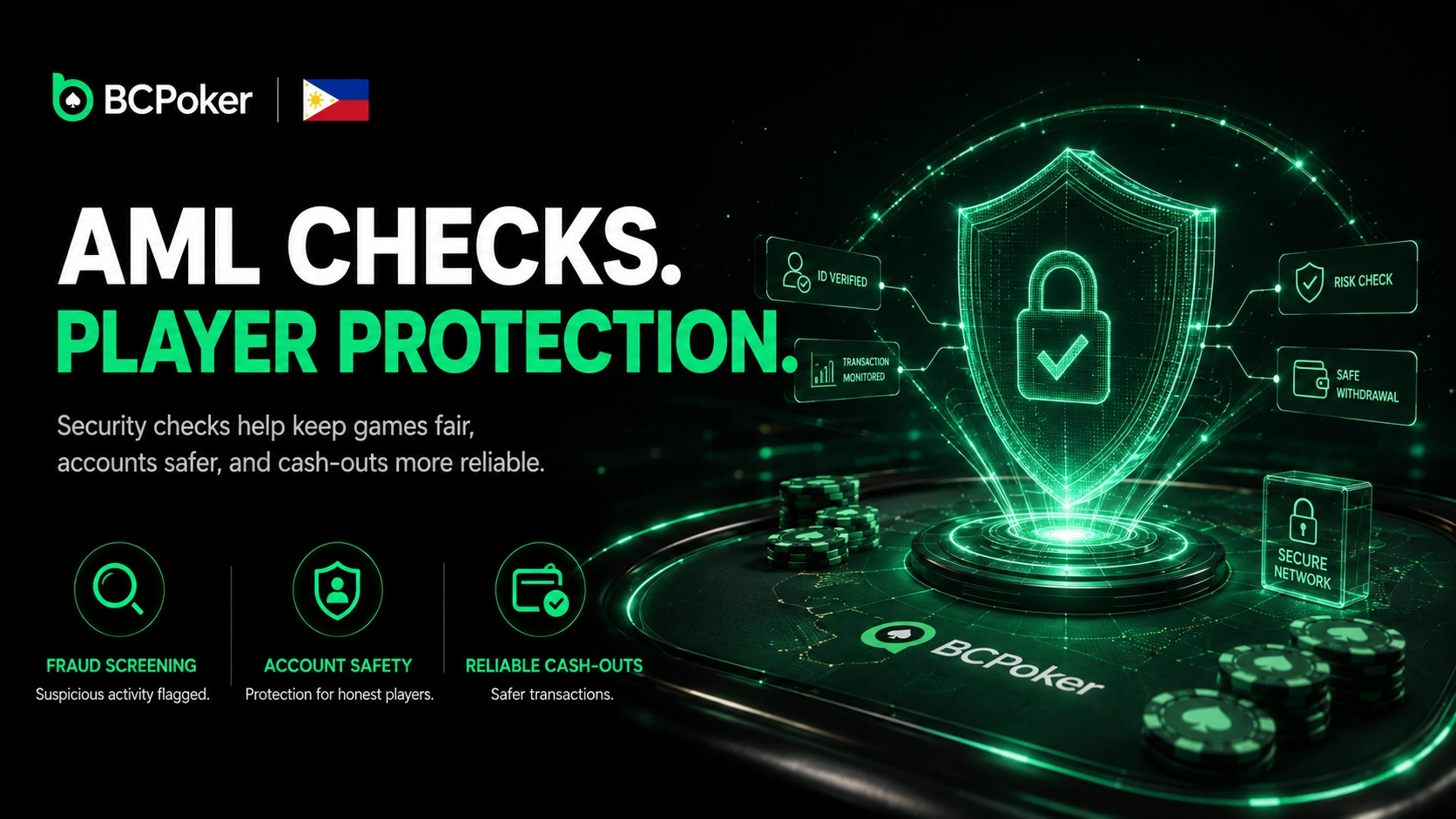
Both automated systems and manual reviewers keep watch over account activity around the clock, looking for patterns that fall outside normal player behaviour, such as unusually large or rapid transactions moving through an account. Local payment channels commonly used across the Philippines, alongside cryptocurrency deposits and withdrawals, all pass through the same underlying monitoring, with anything unusual flagged for a closer look before being cleared rather than blocked outright without explanation. Cryptocurrency transactions get an additional layer of scrutiny, since wallet addresses involved in a deposit or withdrawal are screened against international sanctions databases through third-party blockchain analysis.
Identity Verification as Part of AML Compliance in the Philippines
Identity verification, generally known as KYC, ties directly into the broader AML framework rather than sitting apart from it. Standard documentation, typically a government-issued ID along with some basic personal information, confirms who actually controls an account before a first withdrawal is processed or certain bonuses are claimed. This step also supports age verification, helping ensure that every account belongs to a player who meets the platform’s minimum age requirement, regardless of which country they’re playing from.
Reporting Suspicious Activity
When monitoring systems or staff reviewers spot activity that raises genuine concern, internal procedures kick in to document the case and, where necessary, escalate it through the appropriate compliance channel. Enhanced due diligence may follow for the account involved, which can include a temporary pause on activity while a closer review takes place. This process applies consistently regardless of region, so players across the Philippines are held to the same standard as anyone else on the platform.


